When the client chooses a consultant but still wants to decide everything
A consultant is chosen to bring expertise, vision, and method. But what happens when the client demands results while continuing to decide the strategy, tools, timelines, and operating methods? Between leadership, the internal team, and the external professional, a fragile balance often emerges—one that can determine whether a project succeeds or fails.
There’s a contradiction I’ve been encountering for years in the world of consulting. A company looks for an external professional because it believes it needs skills, experience, a method—or simply a different perspective—from the one it has internally. It selects that person, meets with them, reviews their CV, listens to their ideas, and ultimately decides to assign them the engagement. Then, however, it starts explaining to them exactly how that work should be carried out.
Summary
This is where one of the most common problems in the client–consultant relationship begins. The client naturally has the right (and the duty) to decide where it wants to go, what the company’s priorities are, what constraints exist, and how much it can invest. But there is a fundamental difference between defining an objective and deciding the strategy needed to reach it. When that difference disappears, consulting risks turning into something completely different.
The client decides where to go. The consultant should know how to get there
A business can say: I want to increase brand awareness, enter a new market, improve my reputation, generate business contacts, fill my restaurant more, increase hotel bookings, position a product, or build relationships with specific media. These are perfectly legitimate goals. In fact, the clearer they are, the better the person tasked with achieving them can work.
The client must also communicate the budget, the resources available, organizational constraints, priorities, commercial information, and everything the consultant cannot know from the outside. The company is the one that knows its own product, its history, its margins, its customers, and many of the internal dynamics. Precisely for this reason, I believe it’s essential to always start with a initial project analysis: without a serious review of the context, the critical issues, and the objectives, any strategy risks being built on assumptions.
But once the destination has been defined, the expertise for which the professional was selected should come into play. Which channels to use, which priorities to assign, how to distribute the budget, which activities to start first, which to postpone, what positioning to build, and which strategy to adopt are decisions that should arise from discussion, but should primarily fall within the responsibility of the person carrying out that work professionally.
You can’t ask a consultant to be responsible for the outcome if you remove their ability to decide how to achieve it.
If you’ve already decided everything, maybe you’re not looking for a consultant
There is, of course, another type of professional relationship—fully legitimate. A company may already have a strategy defined internally and simply need someone to implement it. In that case, what’s needed are operational skills, production capacity, organization, and respect for the instructions received.
But we need to call things by their name. If you’ve already decided the strategy, the tools, the timelines, and the operating methods, you’re probably not looking for a consultant. You’re looking for an implementer.
The problem arises when these two models get confused. A consultant is hired; they are formally assigned strategic responsibility, but in practice every decision must be approved, changed, reinterpreted, or replaced based on momentary impressions. The professional becomes responsible for results produced by a strategy that, in reality, no longer belongs to them.
It’s an impossible position. Responsibility and autonomy must go hand in hand. If a person can only influence decisions marginally, they can’t be considered fully responsible for the consequences of those decisions.
Being selected doesn’t automatically mean you have the conditions to do your job properly
Being chosen by a client doesn’t automatically mean having the conditions to do your work well. This distinction is important because many collaborations fail not because of a lack of skills, but because those skills are not actually put in a position to function.
You can choose an excellent consultant and then keep them out of the relevant information. You can hire an agency and not provide any materials. You can ask for a strategy and change it every week. You can demand speed and then slow down every approval. You can expect initiative and simultaneously control every single step. In the end, formally, the consultant is there. Operationally, though, they were never really allowed to do their job.
The client must trust the choice it made. That doesn’t mean giving carte blanche, giving up control, or accepting any proposal without discussing it. It means recognizing that if I chose someone because they have a skill I’m missing or want to integrate, I must allow that skill to genuinely enter the project.
Marketing and communications are not the sales department
One of the most frequent sources of tension comes from measuring results. Marketing, communications, and PR are sometimes assessed using a single indicator: how much did we sell? It’s an important question, of course. A business exists also to produce economic results. But using revenue as the only yardstick means ignoring how much of the commercial process works.
Marketing doesn’t necessarily place the order, but it can make it enormously easier. Think of a large food brand. If a brand like Barilla were to stop investing in its awareness, communications, positioning, advertising presence, and the building of perceived value, the work of the sales force would inevitably become much harder. The salesperson wouldn’t just bring a product: they would have to continuously explain who the company is, why it should be chosen, what value it represents, and why the customer should trust it.
Marketing and communications prepare the ground. They build brand awareness, reputation, familiarity, trust, positioning, and demand. They create content, sales materials, contacts, opportunities, relationships, and arguments that can make the sales process easier. But they must be managed competently, because in some cases digital marketing can even worsen reputation instead of strengthening it.
Not everything that happens after a lead depends on marketing
This becomes even clearer when we talk about lead generation. A campaign can generate interested contacts, but from that moment on another part of the organization comes into play. Someone must reach out to those people, do it at the right times, be able to understand the need, present the offer, handle objections, and guide the potential customer toward a decision.
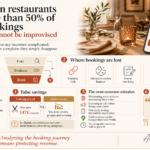
If leads aren’t followed up, if they’re contacted after days, if the salesperson doesn’t pursue them, if the price isn’t competitive, if the product doesn’t convince, or if the sales process is inefficient, automatically attributing the result to marketing is a dangerous simplification. In some industries, you can see it clearly—for example, you can lose bookings even after generating interest, simply because the next step doesn’t work the way it should.
The same applies the other way around. Mediocre marketing can’t justify itself by claiming that everything depends on sales. Each function must take its share of responsibility. That’s exactly why you need intermediate KPIs: cost per contact, lead quality, awareness, traffic, engagement, requests received, conversions across different stages, response times, and sales close rate. Only by looking at the entire process can you truly understand where the chain is breaking.
The most delicate triangle: client, internal team, and consultant
But most of the time, the relationship isn’t simply between the company and the consultant. There is a third element: the internal team. And this is where dynamics can become especially interesting (and sometimes quite complicated).
The internal team can be an extraordinary resource. It knows the company from the inside, understands how processes work, knows the customers, remembers past decisions, identifies problems that may be invisible from the outside, and has a wealth of information that no consultant could quickly acquire. When internal teamwork and external consultants truly collaborate, the result can be much stronger than the sum of the individual skills. The consultant brings experience gained across different companies and situations; the team brings deep knowledge of the organization. It’s probably one of the best possible combinations. But it doesn’t always happen.
When the consultant is perceived as a threat
Sometimes the arrival of an external person is experienced as an invasion of someone’s territory. There may be a fear of losing space, authority, control—or simply of being called into question. From here, very different forms of resistance can arise: information that arrives late, activities slowed down, instructions apparently forgotten, decisions systematically challenged, or attempts to delegitimize.
In some cases, internal politics also comes into play. A sentence is repeated without the context in which it was said. A conversation is told only partially. Insinuations, interpretations, gossip, and small attempts to set consultant and management against each other multiply. These are dynamics that anyone who has worked in consulting for a while has probably encountered at least once—and they consume an enormous amount of energy.
Professional disagreement, on the other hand, is not only legitimate: it’s useful. An employee who knows the company can spot risks that the consultant doesn’t see. They can challenge a decision, bring data, and propose alternatives. A team that always says yes isn’t necessarily a good team
There’s, however, a clear line between professional confrontation and a lack of personal respect. Insults and slurs are not part of normal workplace discussion. When that line is crossed—for what it’s worth to me—one of the fundamental conditions for collaboration disappears. And yes, it can be a sufficient reason to stand up and leave.
Even the consultant can be the problem
But it would be too convenient to tell this story as if the consultant is always right and, on the other side, there are only difficult clients or hostile teams. That’s not the case. Even people who join from outside can create huge problems. There are consultants who arrive at the company convinced that they have to teach everything to everyone. They ignore people who have been working there for ten or twenty years, go around the team, dismiss established processes without understanding them, and propose radical transformations after just a few hours of observation. Others use a deliberately incomprehensible language—almost as if a strategy becomes more sophisticated if it’s described using enough English terms.
Then there are cookie-cutter strategies: the same funnel, the same content, the same advertising, the same tools for any business—from a restaurant to a software house. That is the exact opposite of consulting. Many marketing mistakes that repeat themselves more often come from the belief that there is a one-size-fits-all recipe.
Professional autonomy doesn’t mean superiority. The consultant must listen, study, understand the context, and recognize the value of the people already working within the organization. Entering a company also means having the humility to understand first before changing things.
“We want big results.” But with what budget?
Another recurring distortion concerns the gap between expectations and resources. You may receive huge objectives paired with tiny budgets, lean teams, non-existent materials, and almost symbolic timelines. You’re asked for national visibility with local investments, to acquire customers without an advertising budget, to earn press coverage without newsworthiness, and to achieve very rapid organic growth in markets that are already crowded.
The issue isn’t that every project necessarily requires large investments. Many smart strategies are born precisely from the ability to make good use of limited resources. The problem arises when there’s a structural imbalance between what you want to achieve and what you’re willing to put on the table. The budget doesn’t automatically buy the result, but it defines the scope of what’s possible. Denying this means building impossible expectations and setting the stage for a future disappointment.
And then there’s the most famous request: it was needed yesterday
Time is another element that’s often underestimated. Of course, there are urgent activities and moments when it’s necessary to speed up. People who work in communications and marketing know all too well about sudden deadlines, crises, events, press releases, and campaigns that must be adapted quickly. Urgency is part of the job, but turning any activity into a permanent emergency means eliminating the possibility of working systematically.
A SEO strategy doesn’t produce all of its effect in just a few days. Relationships with the media aren’t built by ordering publications the way you would order products from a catalog. Reputation needs continuity. Positioning a brand requires repeated exposure and consistency. Even an advertising campaign needs enough data to be assessed and optimized. The same applies when you work by integrating different tools: PR and content marketing can work together, but they have different logics, timelines, and KPIs.
Rome wasn’t built in a day. It’s not an excuse to ask for indefinite trust or to hide results that don’t exist. It’s simply a matter of reality. Time needs to be accompanied by measurement: if the final goal requires six months, then during those six months there must be intermediate signals that allow us to understand whether we’re moving in the right direction. That’s how time stops being something to wait for and becomes a path.
Confusion has a cost (even when it doesn’t show up on the invoice)
There’s another hard-to-account-for—but very real—factor: the cost of constant changes in direction. Today the priority is acquiring customers. Tomorrow it becomes awareness. The day after tomorrow we have to redo the website. A week later the website no longer matters and we need TikTok. Then someone shows up who attended a conference and suddenly we have to change everything because they heard about a new platform.
Changing strategy when the data shows that a choice isn’t working is smart. Changing it constantly because moods change, a new opinion arrives, or someone has seen what a competitor is doing means wasting resources without giving any activity time to produce results.
Every meeting has a cost. Every revision has a cost. Every interrupted strategy has a cost. Every hour spent debating—again—for the fourth time a decision that’s already been made is an hour not used to implement it. Even control, when it becomes excessive, can turn into a brake. If a meeting is needed to decide whether to hold a meeting, then something in the process probably needs to be reviewed.
Serenity is not just an organizational detail
Among all the conditions necessary for good collaboration, there’s one that’s rarely discussed: serenity. At work, it’s sometimes treated like an almost sentimental concept—something pleasant but not strictly necessary. Instead, it’s a deeply productive condition. A consultant who can focus on the project uses their energy to analyze, create, decide, solve problems, and find opportunities. If they have to spend half of that energy defending themselves, rebuilding conversations, managing tensions, interpreting underlying meanings, or figuring out who is working against the effort, then that same energy is taken away from the work they were hired to do.
The same goes for the internal team. An environment in which every proposal becomes a confrontation, every mistake becomes a search for blame, and every decision turns into a political battle doesn’t produce more attentive people—it produces more cautious people, less creative people, and often people less willing to take responsibility. Serenity doesn’t mean the absence of disagreement. It means being able to debate a problem fiercely without turning it into a personal conflict.
Trust doesn’t mean zero control
Often autonomy and trust are interpreted as a request for absolute freedom. They’re not. A consultant must account for their work, explain their choices, show results, share data, and accept verification. It’s normal for the company to want to know how resources and budgets are being used. The difference is between control and constant interference. To control is to verify that the strategy is producing the expected effects. To interfere is to constantly change how it’s implemented—while still evaluating the outcome as if nothing had really been altered.
Professional trust is much more concrete: we agree on objectives and scope; we know who decides what; we share data; we periodically verify results; when something isn’t working, we discuss it and change course based on evidence.
The real contract isn’t the one that’s signed
At the heart of good consulting there’s certainly a formal contract, but there’s also one that’s even more important in practice: the implicit agreement on how we’ll work together. Clear roles, autonomy consistent with responsibilities, access to information, team collaboration, budgets adequate to the objectives, realistic timelines, mutual respect, shared KPIs, and above all clarity about who decides what.
Harmony is also needed. A word that in management language may sound not very technical, but in reality means something very concrete: different people working in the same direction without using the project as a territory to defend their personal turf. And trust is needed. Not blind, not naive, not endless. Professional trust that can be verified through the work and the results.
The consultant doesn’t always have to be right. They must be able to do their job
A great professional doesn’t ask that every one of their proposals be accepted. They ask to be able to argue them. They don’t demand the absence of control. They require that responsibilities and the possibility to intervene are consistent. They don’t want to replace the entrepreneur or know the company better than the people who live it every day.
But in the same way, they can’t be used as a stamp of approval for decisions made elsewhere, and then be called on to answer when those decisions don’t work. Maybe this is the point where many collaborations should stop even before starting: understanding what we genuinely expect from each other. A consultant? A strategist? An operations lead? An executor? Support for the internal team? These are different roles, and all of them can be useful—as long as they’re clearly stated.
Many conflicts between the client, the internal team, and the consultant arise precisely from expectations that were never made explicit. Everyone assumes the other side should behave in a certain way, but no one ever defined it clearly.
When a collaboration really works
The best collaborations I’ve seen weren’t necessarily the ones without problems. Quite the opposite: they were often complex projects in which difficulties, mistakes, and disagreements were not missing. The difference was in how they were handled. The client knew the objectives. The consultant had the space to identify the path. The internal team could discuss and contribute without feeling threatened. Data was used to make decisions—not to look for someone to blame. Responsibilities were clear, and when something didn’t work, the focus was on understanding why rather than quickly deciding who to accuse.
It’s in these conditions that consulting becomes truly useful. Not because the consultant is infallible, but because different skills can work together instead of canceling each other out. In the end, the principle is simple: if you choose a professional because you believe they can help you, you must put them in the conditions to do so.
You can ask for results, explanations, numbers, responsibilities, and even challenge their choices. But you must leave them space in which that professionalism can actually exist. Otherwise, you’re left with only a fairly common paradox in our work: looking for expertise outside the company and then doing everything to prevent it from truly being able to join in.
Usiamo cookie per ottimizzare il nostro sito web ed i nostri servizi.
Funzionale
Always active
L'archiviazione tecnica o l'accesso sono strettamente necessari al fine legittimo di consentire l'uso di un servizio specifico esplicitamente richiesto dall'abbonato o dall'utente, o al solo scopo di effettuare la trasmissione di una comunicazione su una rete di comunicazione elettronica.
Preferenze
L'archiviazione tecnica o l'accesso sono necessari per lo scopo legittimo di memorizzare le preferenze che non sono richieste dall'abbonato o dall'utente.
Statistiche
L'archiviazione tecnica o l'accesso che viene utilizzato esclusivamente per scopi statistici.L'archiviazione tecnica o l'accesso che viene utilizzato esclusivamente per scopi statistici anonimi. Senza un mandato di comparizione, una conformità volontaria da parte del vostro Fornitore di Servizi Internet, o ulteriori registrazioni da parte di terzi, le informazioni memorizzate o recuperate per questo scopo da sole non possono di solito essere utilizzate per l'identificazione.
Marketing
L'archiviazione tecnica o l'accesso sono necessari per creare profili di utenti per inviare pubblicità, o per tracciare l'utente su un sito web o su diversi siti web per scopi di marketing simili.