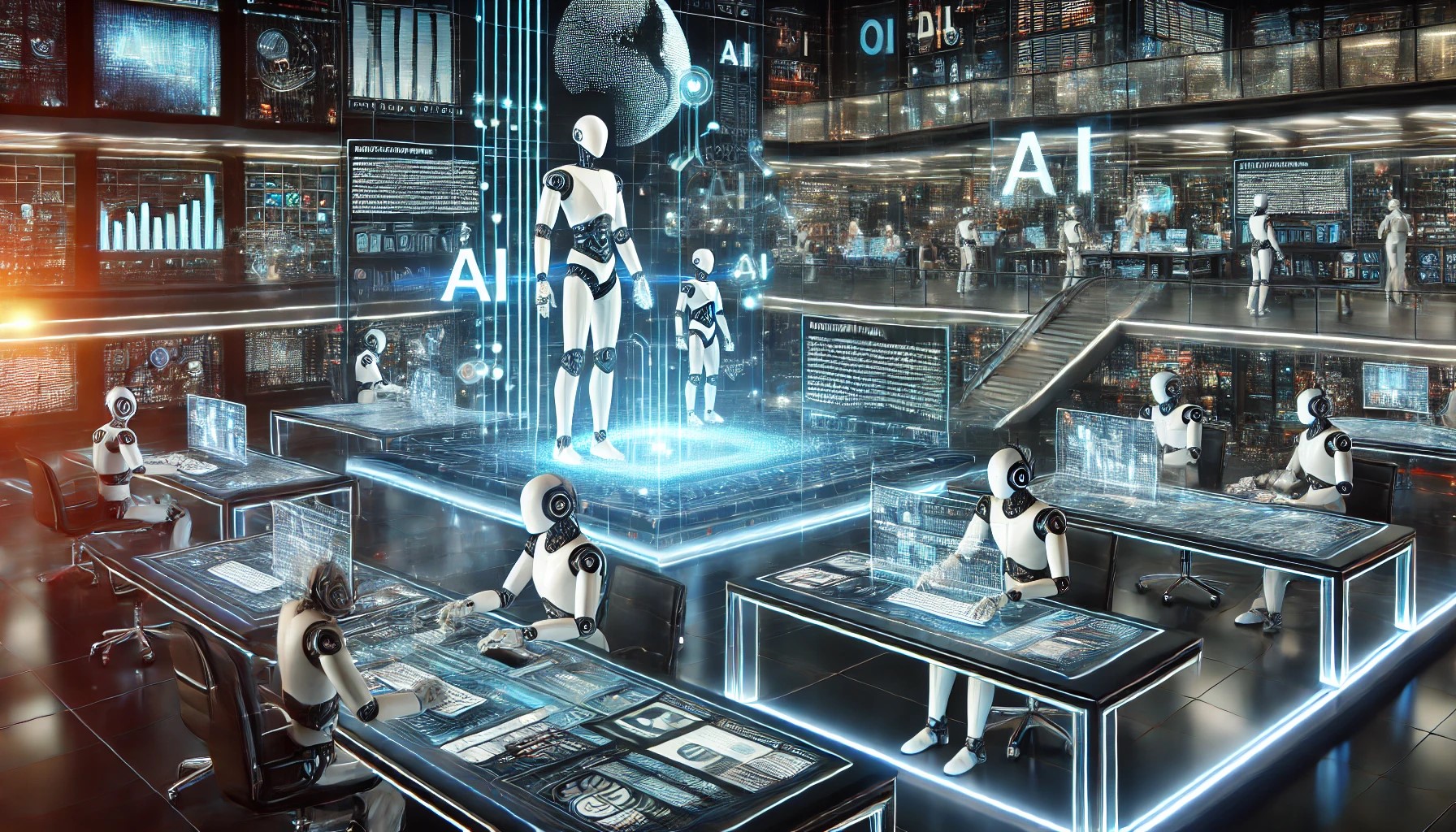
A quick overview of OpenAI’s GPT-4 language model in just 10 key points. Discover how it works, its main features, and the potential impact it could have on the future of AI-generated content.
A quick overview of OpenAI’s GPT-4 language model in just 10 points. Discover how it works, its features, and its potential impact on the future of AI-generated text.
Summary
Artificial Intelligence (AI) has come a long way since its inception, and its evolution has been remarkable. AI has revolutionized the way we work, communicate, and live. AIhas the potential to transform every industry and, with the advent of GPT-4, it is set to make a huge leap forward in the field of natural language processing (NLP).
1. What is Artificial Intelligence
AI is a branch of computer science that aims to create intelligent machines capable of performing tasks that usually require human intelligence. The evolution of AI can be divided into three stages: the first stage consists of rule-based systems, the second of statistical learning, and the third of deep learning.
In the first stage, AI systems relied on a set of rules programmed into the system. These rules were used to make decisions and perform tasks. The second stage of AI involved the use of statistical learning, where machines were trained on large datasets to identify patterns and make predictions. The third stage of AI, deep learning, involves the use of neural networks inspired by the human brain.
2. What is GPT-4 and how does it work?
GPT-4 is the fourth iteration of the Generative Pre-trained Transformer (GPT) language model developed by OpenAI. It is a deep learning model that uses unsupervised learning to generate human-like text. GPT-4 is designed to understand the context of a given text and generate coherent and relevant responses.
GPT-4 is based on a transformer architecture, a type of neural network optimized for processing sequences of data. It is pre-trained on a large corpus of textual data and can generate text in multiple languages. GPT-4 can be fine-tuned for specific tasks such as language translation, question answering, and summarization.
3. The evolution of GPT models
GPT models were introduced by OpenAI in 2018 with the release of GPT-1. The model was trained on a large corpus of textual data and was capable of generating human-like text. GPT-2 was released in 2019 and could generate text that was more coherent and diverse than its predecessor. However, due to concerns over potential misuse of the model, OpenAI did not make the full model publicly available.
In 2020, OpenAI released GPT-3, which represented a significant improvement over previous versions. GPT-3 can generate human-like text that is hard to distinguish from text written by a person. It is capable of performing a range of tasks such as language translation, summarization, and question answering.
5. What’s new in GPT-4 compared to GPT-3
One of the significant differences between GPT-4 and GPT-3 is the increased number of parameters. GPT-3 had as many as 175 billion parameters, making it one of the largest and most powerful AI models. However, GPT-4 is expected to have even more parameters, potentially surpassing the 1 trillion mark. With more parameters, GPT-4 will have a deeper understanding of language and will be able to generate more coherent and contextually relevant text.
Another exciting new feature of GPT-4 is its ability to understand and generate multimodal content. While GPT-3 was able to generate text, GPT-4 is expected to generate not only text but also images, video, and audio. This feature will allow GPT-4 to create more engaging and interactive content, making it suitable for applications in various sectors such as gaming, advertising, and entertainment.
GPT-4 is also expected to improve on GPT-3’s natural language understanding capabilities. GPT-3 was already impressive in its ability to understand context and generate coherent text. However, GPT-4 is expected to go even further, potentially incorporating knowledge graphs and other forms of external knowledge to enhance language understanding.
Finally, GPT-4 should be more efficient in its use of computational resources. GPT-3 required incredibly powerful hardware for training and running, limiting its accessibility for smaller organizations or individuals. However, GPT-4 should be more efficient, making it more accessible and affordable for a wider range of users.
Overall, GPT-4 is expected to represent a significant leap forward in AI language models, bringing new advances in multimodal content generation, natural language understanding, and efficiency. As we await the official announcement and release, researchers and developers are already anticipating the potential applications and impact of this revolutionary AI model.
6. Potential impact of GPT-4 on various industries
GPT-4 has the potential to revolutionize several sectors, including healthcare, education, and finance. In healthcare, GPT-4 can be used to analyze medical reports and suggest treatment plans. In education, it can be used to create personalized learning plans for students. In finance, it can be used to analyze financial data and make predictions about market trends.
GPT-4 can also be used to improve customer service across various industries. It can be used to generate responses to customer inquiries and complaints, improving response times and customer satisfaction. In finance, it can be used to analyze financial data and make predictions about market trends.
GPT-4 can be used to improve customer service across various industries. It can generate responses to customer questions and complaints, improving response times and customer satisfaction. GPT-4 can also be used in chatbots and virtual assistants to provide more human-like interactions.
7. Challenges and ethical concerns related to GPT-4
While GPT-4 has the potential to revolutionize various sectors, it also poses significant challenges and ethical concerns. One major concern is the potential misuse of the model. GPT-4 can be used to create fake news, impersonate individuals, and spread misinformation.
Another concern is the potential bias of the model. GPT-4 is pre-trained on a large corpus of textual data, which may contain biases and stereotypes. This can lead to biased and discriminatory responses generated by the model.
8. The future of AI and language processing
GPT-4 represents a milestone in the field of AI and language processing. It is expected to have a profound impact across various sectors and revolutionize the way we communicate and work. GPT-4 will likely pave the way for more advanced language models capable of understanding and generating text in a variety of languages and contexts.
GPT-4 also raises important ethical questions about the use of AI and the need for regulation and oversight. As AI continues to evolve, it is essential to ensure that it is used ethically and responsibly.
9. Comparison with other language processing models
GPT-4 is not the only language model available. There are numerous other models that use different approaches to language processing, such as BERT, XLNet, and T5. Each model has its strengths and weaknesses, and the choice of model depends on the specific task and context.
GPT-4 is expected to be more advanced than its predecessors and other language models. However, it is important to evaluate each model based on its performance and accuracy for specific tasks.
10. What can we expect from GPT-4 and the future of AI?
GPT-4 represents a significant milestone in the field of AI and language processing. It is expected to have a profound impact on various sectors and revolutionize the way we communicate and work. GPT-4 should be more advanced than its predecessors and other language models, with a better understanding of context and higher accuracy rates.
However, GPT-4 also poses significant challenges and ethical concerns. It is essential to ensure that AI is used ethically and responsibly, with appropriate oversight and regulation to prevent misuse. As AI continues to evolve, we can expect more advanced language models and intelligent machines capable of performing tasks that were previously thought impossible. However, it is important to ensure that AI is developed and used in a way that benefits society as a whole.
As AI continues to transform our world, it is important to stay informed about the latest developments and their implications. Follow OpenAI and other leading AI research organizations to stay up to date on the latest advances in AI and language processing.
Usiamo cookie per ottimizzare il nostro sito web ed i nostri servizi.
Funzionale
Always active
L'archiviazione tecnica o l'accesso sono strettamente necessari al fine legittimo di consentire l'uso di un servizio specifico esplicitamente richiesto dall'abbonato o dall'utente, o al solo scopo di effettuare la trasmissione di una comunicazione su una rete di comunicazione elettronica.
Preferenze
L'archiviazione tecnica o l'accesso sono necessari per lo scopo legittimo di memorizzare le preferenze che non sono richieste dall'abbonato o dall'utente.
Statistiche
L'archiviazione tecnica o l'accesso che viene utilizzato esclusivamente per scopi statistici.L'archiviazione tecnica o l'accesso che viene utilizzato esclusivamente per scopi statistici anonimi. Senza un mandato di comparizione, una conformità volontaria da parte del vostro Fornitore di Servizi Internet, o ulteriori registrazioni da parte di terzi, le informazioni memorizzate o recuperate per questo scopo da sole non possono di solito essere utilizzate per l'identificazione.
Marketing
L'archiviazione tecnica o l'accesso sono necessari per creare profili di utenti per inviare pubblicità, o per tracciare l'utente su un sito web o su diversi siti web per scopi di marketing simili.