The clamor ofovertourism is everywhere: cities under siege, villages turned into stages, residents fleeing. Places become products, experiences all turn the same, and true beauty fades away, drowned out by the noise. Yet,far from that clamor, another world exists. A quieter, more human world. Made up of small gestures, slower rhythms, genuine relationships. It’s the world ofslow places: towns that don’t chase visibility at any cost, valleys that refuse to conform, tables set not to be photographed, but to be shared. In these spaces, haste dissolves, and discovery takes its place. A dish tells the story of the seasons. A road tells history. A person tells their own story. And time, which always seems lacking elsewhere, here sits beside you and accompanies you.
Summary
Overtourism: when too much is too much
According toSustainable Travel International, overtourism occurs when the number of visitors compromises the quality of local life and environmental integrity. Venice, Hallstatt, Paris: the problem is global and urgent. The effects are visible and measurable: rising housing costs, declining livability, environmental damage, loss of identity. Relationships weaken, rhythms are broken. Beauty gives way to performance.
The signs are clear and visible:
theincrease in housing costs;
thereduction in daily livability;
i irreversible environmental damage;
theprogressive loss of cultural identity.
Unique places that end up looking alike, swept away by the desire to “please” the global market. Thus, authenticity is consumed, experiences become impoverished, trust between hosts and visitors is undermined.
The answer is slowness
Slowtourism emerges as acultural and strategic antidote to excess, conformity, and the speed that drains places of their meaning. Inspired by the values ofSlow Food e Cittaslow, it proposes a way of traveling that respects the rhythm of both places and people. It’s not just about avoiding crowds, but about changing the paradigm: fewer stops, more depth. It’s a different way of traveling, inspired by the values ofSlow Food and to the Cittaslow movement, which place time, care and authentic relationships with the territory at their core. But it’s not just about avoiding crowds. The point is not the number of people, but the quality of the experience. Slow tourism offers a change of paradigm:
fewer stops, more depth;
fewer selfies, more real looks;
less consumption, more listening;
less checklists, more connection.
It means accepting that you can’t see everything, but you can truly feel something. It means choosing the train over low-cost flights, the walk over the timed visit, the story over the review. Those who choose slowness do not give up the journey, but restore its fullest meaning: transformation, respect, wonder.
The invisible map of slow places
In Italy, there are dozens of areas offering authentic experiences: villages in the mountains, isolated valleys, resilient communities. Places where hospitality is still a sincere gesture. Where a meal is made of seasons, stories, and hands. Where silence is not absence, but attention. Where marketing can and should tell the truth of things.
Villages balanced between past and future, silent valleys, little-traveled paths, communities that have chosen to stay. Not because they are isolated, but because they are aware. These are places that do not seek attention but deserve it. Where time has not stood still but flows differently.
In these areas, often marginal on the map but central to the hearts of those who live there, slowness is a shared value, not a sacrifice. It is a form of cultural resistance, but also an economic resource. Here, tourism is not invasion, it’s encounter. Food is not consumption, it’s storytelling. Hospitality is not service, it’s relationship. It is an invisible map, that of slow places. Traced more by emotions than by satnavs. Where every path, every glance, every set table can become an experience. Where you don’t go just to see, but to understand. Where silence is an integral part of the landscape.
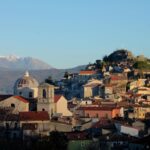
Places like those being reborn in the heart of the Pollino Park — we’ll talk about them in more detail soon — fully embody this spirit. Lands that do not conform to the numbers, but choose quality. That don’t compete on price, but on authenticity. And that ask just one thing of those who arrive: respect.
The value for travelers
For travelers, slow tourism is a unique opportunity: to slow down, reflect, and regenerate. According to the Auckland University of Technology (AUT) report, those who choose slow experiences report greater satisfaction, a deeper connection with the place, and a higher intention to return.
The value for hosts
For destinations and operators, slowness is a sustainable economic model. It generates fewer peaks, but more stability. It requires fewer heavy infrastructures, but more care. It doesn’t destroy territorial capital, it enhances it. It’s a choice that rewards those who know how to position themselves clearly and consistently.
The marketing of slowness
In tourism and food marketing, working slowly means designing experiences, telling stories, building relationships. It’s a strategy focused on the long term, on quality, on identity. It’s not an escape from technology: it’s a conscious use of it to create real value.
Conclusions
Overtourism makes headlines, but real innovation lies in the areas that choose to not shout. To not give in to conformity. To stay true to themselves. The future belongs to those who know how to turn this consistency into an offer, a narrative, and loyalty.
If you work in tourism or food communication and want to explore strategies that value slowness together, book a free consultation.
Usiamo cookie per ottimizzare il nostro sito web ed i nostri servizi.
Funzionale
Always active
L'archiviazione tecnica o l'accesso sono strettamente necessari al fine legittimo di consentire l'uso di un servizio specifico esplicitamente richiesto dall'abbonato o dall'utente, o al solo scopo di effettuare la trasmissione di una comunicazione su una rete di comunicazione elettronica.
Preferenze
L'archiviazione tecnica o l'accesso sono necessari per lo scopo legittimo di memorizzare le preferenze che non sono richieste dall'abbonato o dall'utente.
Statistiche
L'archiviazione tecnica o l'accesso che viene utilizzato esclusivamente per scopi statistici.L'archiviazione tecnica o l'accesso che viene utilizzato esclusivamente per scopi statistici anonimi. Senza un mandato di comparizione, una conformità volontaria da parte del vostro Fornitore di Servizi Internet, o ulteriori registrazioni da parte di terzi, le informazioni memorizzate o recuperate per questo scopo da sole non possono di solito essere utilizzate per l'identificazione.
Marketing
L'archiviazione tecnica o l'accesso sono necessari per creare profili di utenti per inviare pubblicità, o per tracciare l'utente su un sito web o su diversi siti web per scopi di marketing simili.