Having the best examples of social media marketing in your idea vault is an excellent way to develop new ideas for your next campaign. You can always merge two ideas together to create a new strategy or borrow the campaign recipe from a brand in another industry. Not to mention, studying successful examples can also spark new ideas for you. So, in this piece, I’ll guide you through the 12 best social media marketing examples you can’t miss.
Summary
What are the elements of successful social media marketing?
Successful social media marketing is consistent, takes a customer-centric approach, and is powered by a well-thought-out strategy. To start, ROI-positive social media marketing is focused on building relationships with your target audience:
Sharing educational and entertaining content relevant to them
Engaging with them by posting interactive content and responding to their comments and questions
Good social media marketing combines all these efforts into a strategy: a game plan that answers key questions like what content you’ll create, which channels you’ll use, and how often you’ll post.
The final key element of successful social media marketing is consistency. Consistency allows you to set expectations for your audience and positions you as an approachable and reliable business.
What are the best social media marketing platforms?
The best social platforms are those used by your target buyers. Thorough research on your target audience will give you a list of these platforms. Once you finalize them, consider how these platforms will help your business grow. For example, if you run a clothing business, you’ll benefit from a visual social platform like Instagram rather than Twitter, as it will help you showcase your products better.
12 social media marketing examples
From taking an influencer-driven approach to sponsoring a live event, there are plenty of ideas you can explore. Here are 12 of the best real-life social media marketing examples to inspire you:
1. Red Bull’s viral live event campaign
Red Bull puts in a lot of groundwork for their social media marketing. Their Red Bull Stratos campaign, which sponsored athlete Felix Baumgartner’s space jump, is an excellent example. The brand created a dedicated Facebook page for the campaign and posted engaging content that built anticipation for the day Felix jumped.
The live event went viral, bringing in 100 million views, demonstrating that well-planned social media campaigns produce long-term results. The takeaway? The best-performing campaigns require extensive groundwork, but they pay dividends. When planning such a campaign for your business, make sure to work on an idea that aligns with your brand mission.
2. AllBirds’ hype-inducing product launch
A well-executed launch campaign can make or break your brand. Take it from AllBirds, a company that’s now worth over $4 billion. Their launch campaign? A hype campaign on Instagram and YouTube that got people excited and ready to buy their footwear before the release date. The Allbirds campaign started with sharing high-quality images that gave the audience a look at their sneakers.
On YouTube, they created a humorous introductory video, using compelling storytelling elements to share Allbirds’ value proposition (its eco-friendliness).
Additionally, the brand partnered with affiliates to create social media and other marketing content, which helped them grow through word of mouth. The campaign delivered great results because:
It created anticipation around the launch.
They built a unique brand image for themselves that resonated with target buyers.
The brand became social proof so that people could trust it, helping increase sales.
The takeaway here is simple: Don’t be afraid to show your brand’s personality, voice, and values. If anything, staying true to your brand differentiates your social content and helps you stand out from the noise. Plus, get people talking to generate buzz and social proof for your products.
3. DoorDash’s heartfelt and circumstance-sensitive ad
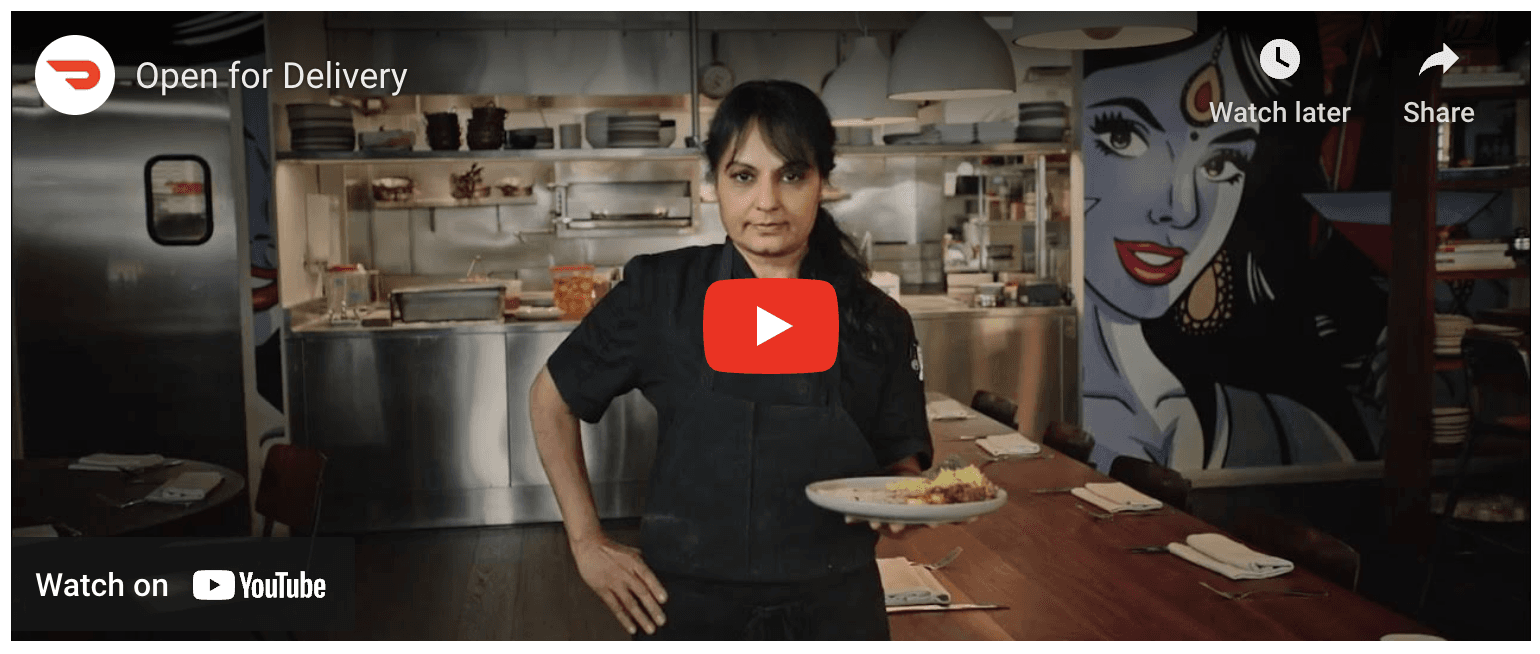
DoorDash launched this ad in the midst of the pandemic, when social distancing had impacted thousands of livelihoods. But instead of being insensitive to the circumstances, DoorDash addressed them directly, offering a solution but never mentioning their business. They did this by taking a human-first angle, showcasing real chefs affected by empty restaurants but still working hard to deliver food.
The campaign was a success because it evoked emotions in its audience by covering a topic their target audience cared about: the impact of Covid-19 on small businesses. Another factor that contributed to its success was the brevity of the video message. It was straight to the point, used persuasive copy, and captured scenes that resonated emotionally with viewers. Some key takeaways you can replicate from this campaign: use emotional storytelling, keep your message brief but as impactful as possible, and never be tone deaf. Always talk about things that matter to your audience and make sure your message aligns with your brand.
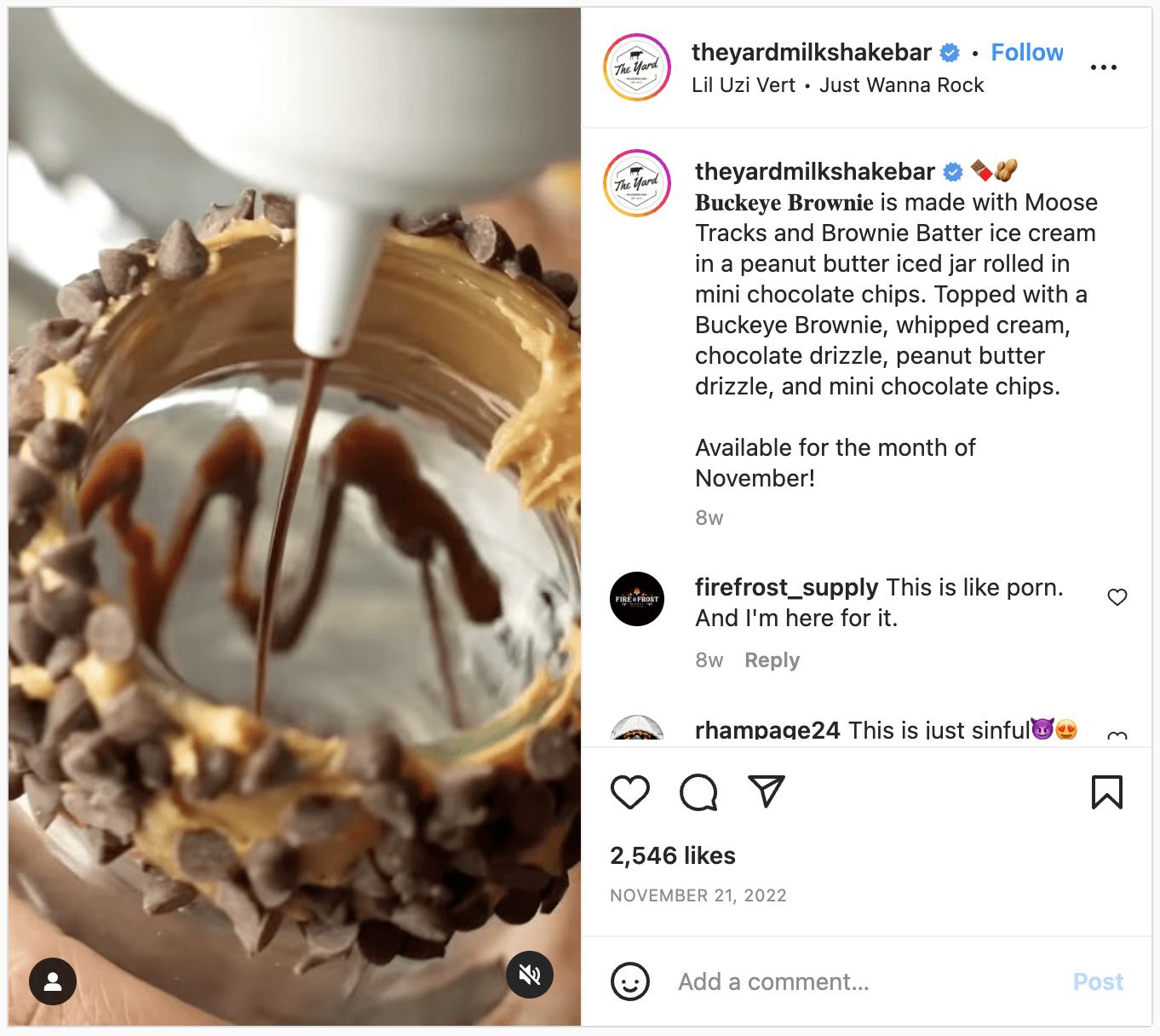
4. Product-Driven Social Content by The Yard Milkshake Bar
The social media marketing of The Yard Milkshake Bar is the perfect example of putting your products front and center to boost sales. Here’s how the milkshake bar wins at social media marketing:
It has an active presence on all social channels used by its target audience, including Instagram and Facebook.
It leverages user-generated content (UGC) and also collaborates with affiliates for social media marketing.
It creates content tailored to the expectations of each channel’s audience and keeps them engaged. For example, the milkshake bar shares high-quality behind-the-scenes videos on Instagram and appetizing shorts on YouTube.
Despite its product-driven social content, The Yard Milkshake Bar continues to focus on its consumers. Wondering how? By using a Facebook group to share exclusive member discounts. Takeaways from this example:
Adopt a community-centric approach
Share UGC and plan exclusive offers and perks for your community members
Use all social channels where your audience is present to reach them where they are
5. “Heroes of the Oceans” Educational Campaign by National Geographic
NatGeo’s mission is to educate and encourage behavioral change among its audience. It effectively leverages two elements to do this: creative storytelling and photojournalism. It also achieves this using different social channels and native content that caters to each channel’s audience. On Instagram, for example, NatGeo uses Stories to create interactive and episodic content on various topics, such as Black Joy:
They also plan specific campaigns, such as the Heroes of the Oceans documentary NatGeo created with Rolex. They shared highlights from the documentary, trailers, and more through their combined social channels.
Simply put, NatGeo’s social campaigns win thanks to their creative approach. The brand also makes the most of each social platform’s features, like polls on Twitter and Stories on Instagram. The takeaways? Visual storytelling is powerful: use it to educate, entertain, and inspire change. Plus, be sure to utilize all the channel-specific features to engage your followers. And don’t forget—brand partnerships can be excellent for reaching a wider audience.
6. Spotify’s Year-End Social Sharing Campaign
Spotify’s Wrapped campaign gives users stats on the songs, podcasts, artists, and genres they listened to throughout the year. The annual campaign also has an artist-specific version called Artist Wrapped, which allows artists to see overall stats for their songs and also thank their listeners:
The campaign helped the music streaming giant create FOMO among non-users, which boosted its app downloads. It also helps increase the time users spend on the app. And with artists sharing their stats on social media, Spotify taps into influencer marketing to grow further without paying those influencers. You can leverage influencer marketing yourself to increase brand awareness and sales. But the Spotify campaign teaches another important lesson: gamifying your campaign encourages people to share it automatically on social media, which boosts social proof, brand awareness, and sales. If you plan to create such a campaign, make sure it is super easy to share on social media. Any friction here can quickly undermine your campaign’s success.
7. Customer-Centric Social Media Experience by Chewy
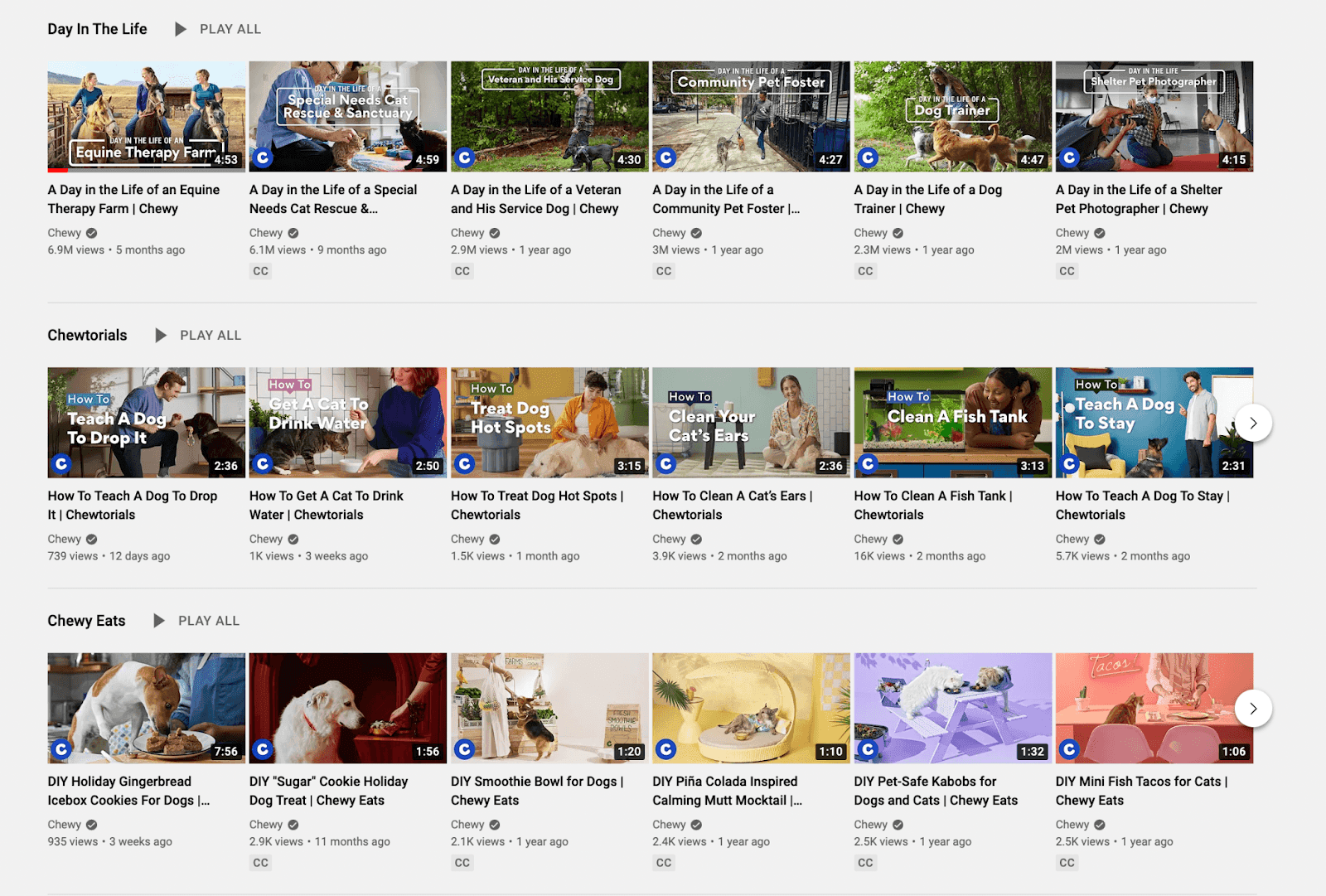
Chewy’s social media is an amazing example of creating platform-specific content, effective social listening, and providing proactive customer service through social channels. For starters, each of Chewy’s social channels has a specific strategy. For example, their YouTube channel doesn’t just post videos. Instead, there are various video categories that the Chewy team creates content for, such as educational pet training videos in Chewtorials and grouped recipe videos in Chewy Eats.
Chewy also shares educational content on Instagram. They also create interactive content, like Q&A sessions with professional veterinarians. That said, Chewy pays attention to everything their consumers and target audience say about them. This is evident from their proactive responses on social media. Here’s an example of a thoughtful reply that went viral, helping Chewy become known as a widely applauded customer-first brand and inspiring brand advocacy.
The strategy works because it focuses on customers—answering their questions, offering timely help and support, and putting the spotlight on the target audience’s pets. What are the best lessons to take away from this social media marketing example? Create content that’s genuinely valuable to your target audience, and dedicate resources to customer support on social media.
8. Empowering and Entertaining Content by Shopify for Entrepreneurs
Like the other social media marketing examples, Shopify leverages different social channels to reach and engage its audience. It stands out for its mission to empower entrepreneurs (their target users: Shopify merchants). To this end, Shopify creates content that:
Inspires people to start their own business
Provides resources for starting and growing their business
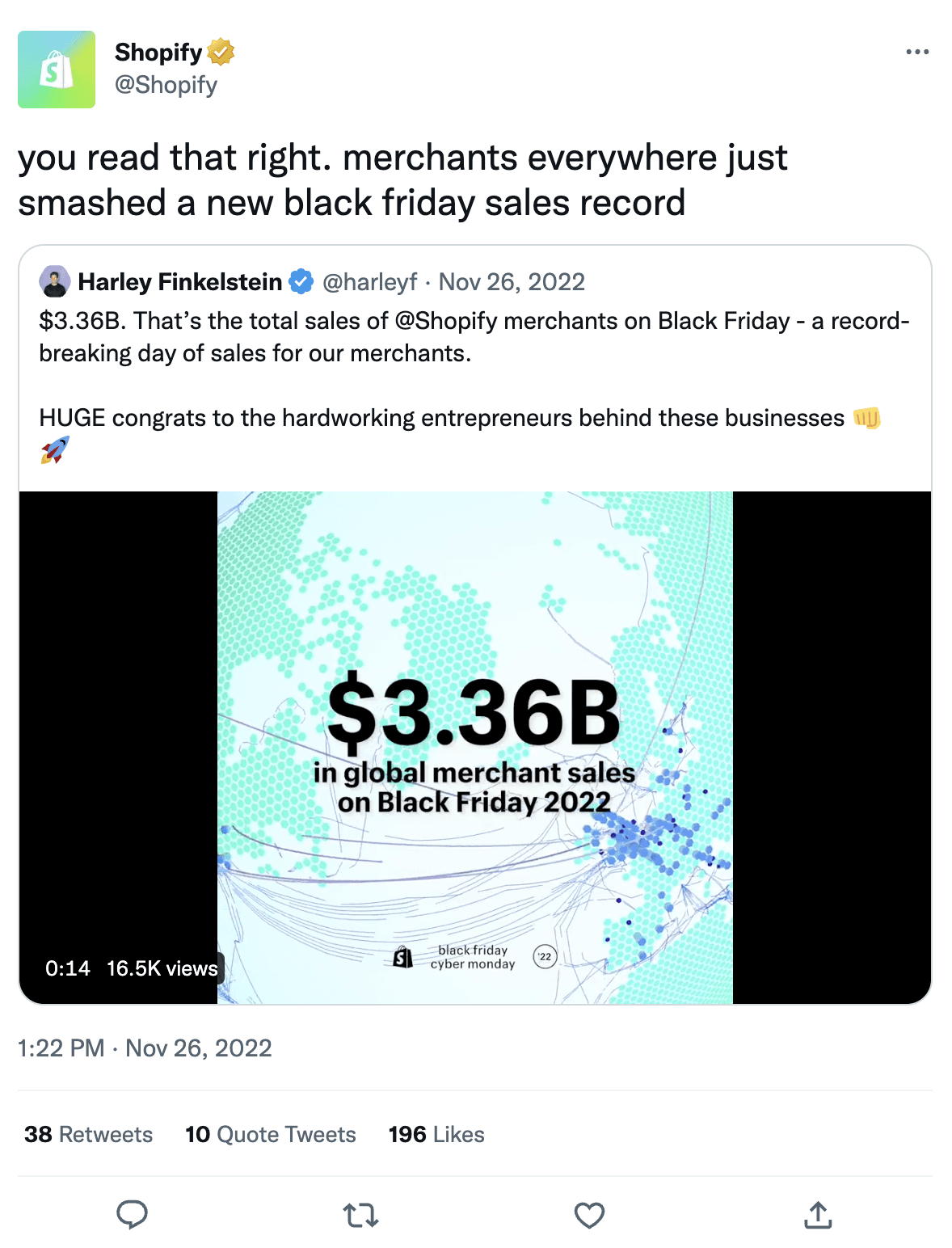
Celebrates them by showcasing their success on their channels, as in this thread:
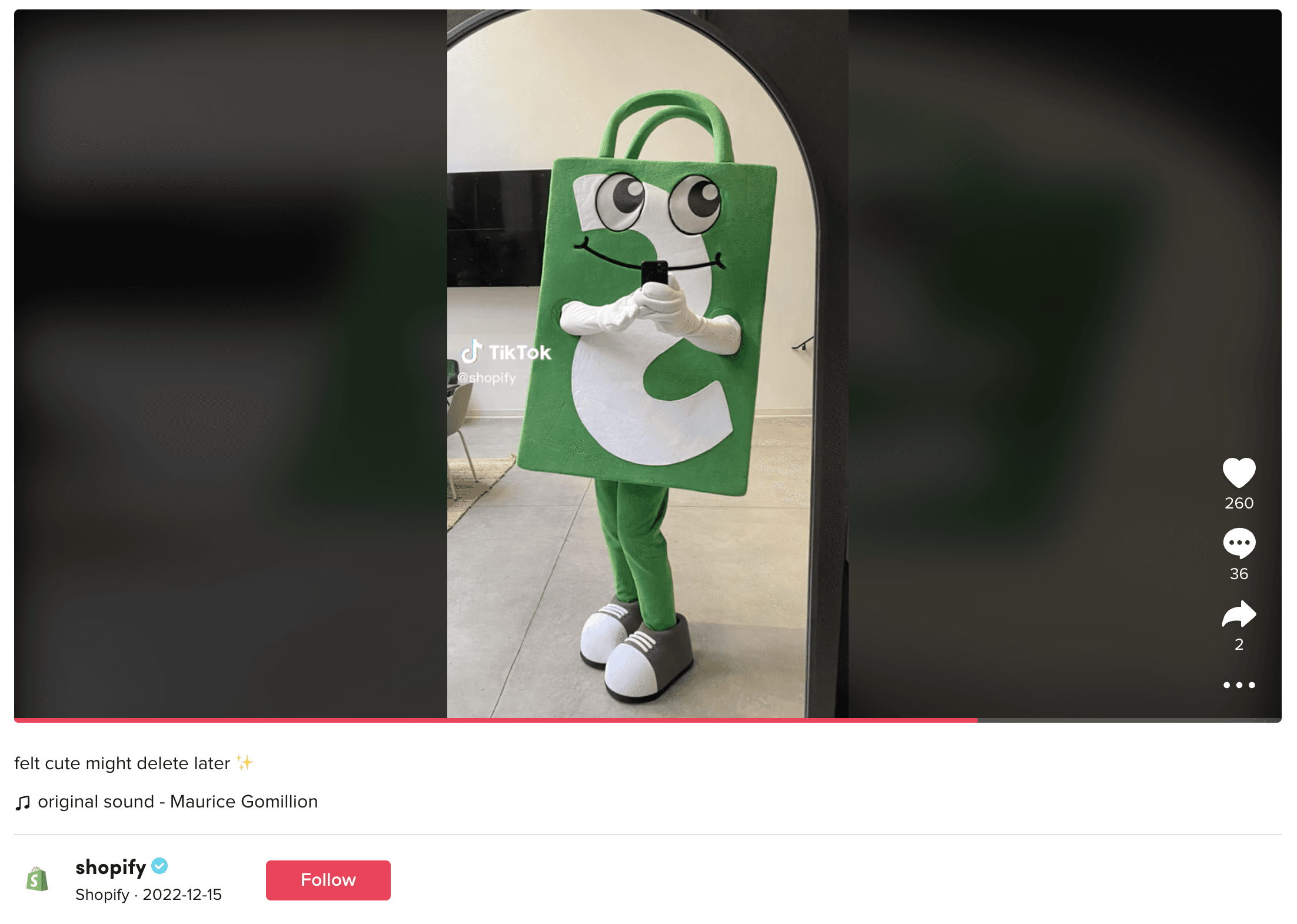
The strategy works so well because Shopify answers all the questions that small business owners have, making them a trusted resource to rely on. Consider talking to your target audience to learn about their pain points, and create fun, educational content around them. Be sure to reach more people by jumping on social media trends—Shopify does this incredibly well on TikTok.
9. Old Navy’s co-creation with your audience approach
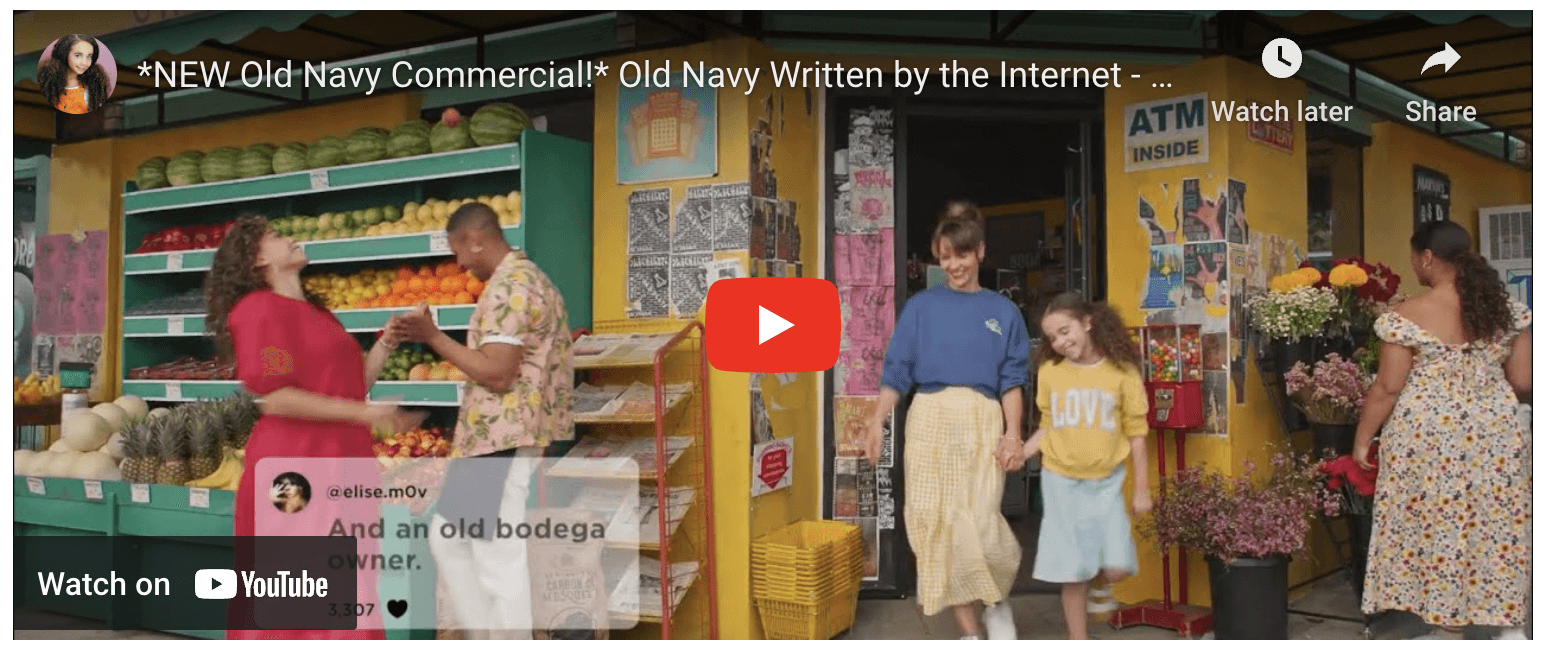
Old Navy adopted a new approach for a successful collaboration between brands and influencers: they found ideas for their ad using social media. The result:
The campaign received a great response for a handful of reasons:
They asked their audience for ideas, which told Old Navy followers that they value them.
It created buzz around the announcement as people couldn’t wait to see how it would turn out, even sharing it with their own circles since it featured their ideas.
It reduced the marketing team’s workload in terms of ideation and distribution, inspiring brand loyalty.
The takeaway? Listen and find ideas from your audience. And don’t be afraid to try something new: this approach was the first of its kind.
10. GoPro’s rule-free creators campaign
For the launch of its new flagship product, the GoPro Hero 11 Black, GoPro hosted an all-inclusive GoPro Creator Summit in Switzerland, a four-day event where they invited 42 creators. The exciting part? There were no preset requirements or guidelines for content production for these creators. Instead, the tech giant offered them a memorable experience and gave them the new product before it was available to the public. The results speak for themselves, with creators producing tons of content using the brand’s hashtag #GoProCreatorSummit. For example, Johnny Lo’s canyon swing video racked up 12.7 million views with 917,000 likes, generating considerable buzz for GoPro’s new product.
And Johnny is just one creator. Another 41 shared content with their engaged audiences across various social channels. The rule-free flexibility made this campaign a success. It’s also what led to the production of the most creative content. The lesson? Trust the influencers you work with to create creative posts on social media. On your end, just make sure to engage only creators whose audience aligns with yours.
11. REI’s experience: the first Black Friday campaign
REI’s #OptOutside social campaign is a wellness-centered Black Friday idea that encourages people to get outdoors, plan adventures, and spend time with friends and family doing something exciting.
The idea works for three main reasons:
It’s a breath of fresh air as the brand encourages people to be active on Black Friday instead of promoting non-stop shopping.
It’s relevant to both the brand (REI sells sporting goods and outdoor items) and its target buyers as it focuses on their wellbeing.
It engages customers. People share their outdoor adventure videos using the REI brand hashtag, which the company then shares on its social channels.
Note that the campaign also wins hearts because it’s less about REI’s product and more about encouraging its customers to enjoy the outdoors. This is something worth considering when planning your next social media campaign: the experiences. Encourage your audience to create new experiences and memories in a way that’s relevant to your brand.
12. Peloton employees as social brand ambassadors
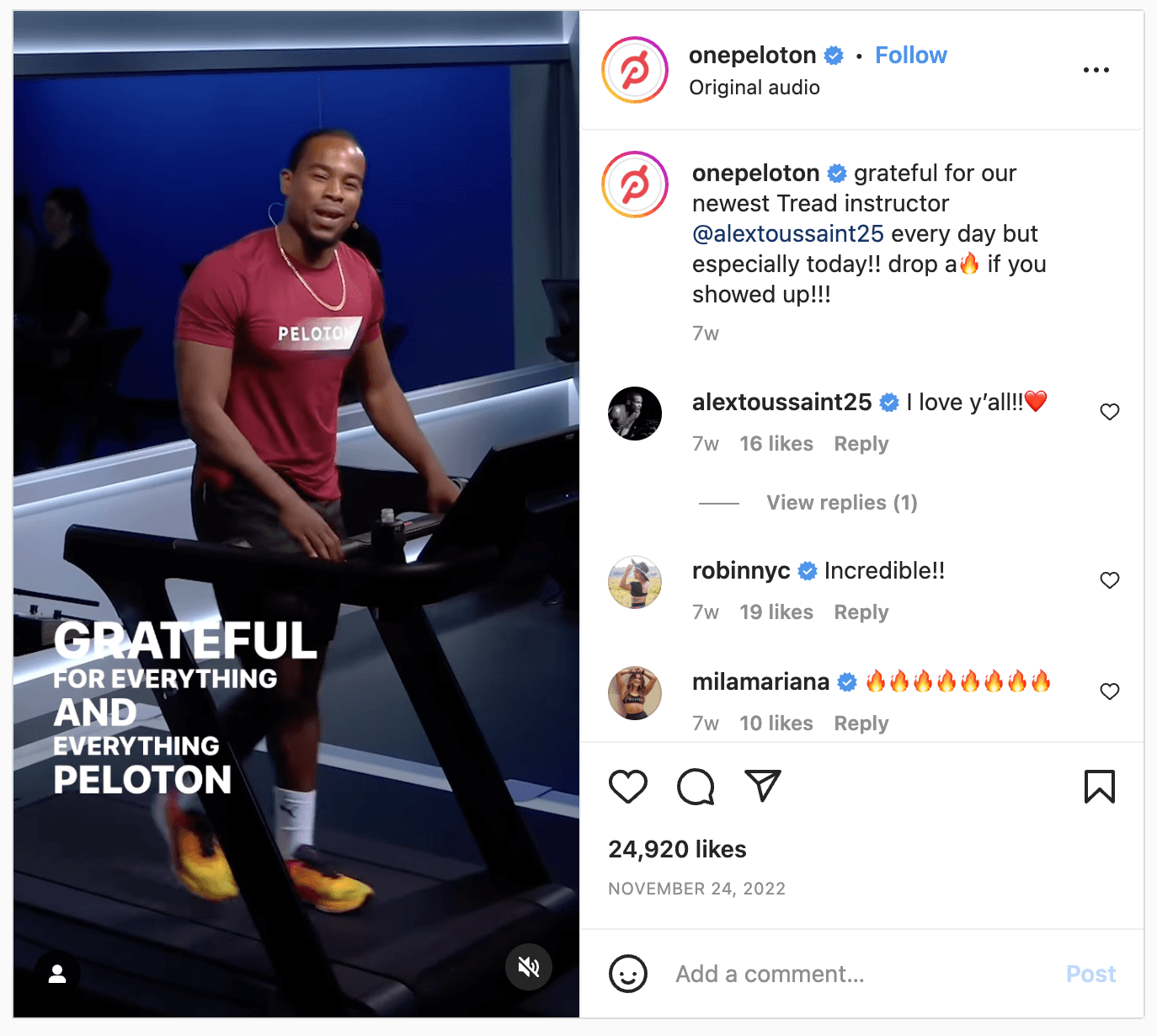
The last in this list of social media marketing examples is the instructor-driven strategy by Peloton. The fitness company uses influencer marketing but with a twist. That is: its instructors are the influencers or brand ambassadors who attract and engage both new and loyal subscribers.
That’s why Peloton’s campaigns revolve around the instructors, their personalities, and their unique motivational styles. It works simply because of its human-first approach. People don’t trust, or even engage with, brand accounts as much as they trust and interact with humans. So giving your employees the spotlight is a surefire way to quickly earn the trust of your audience and also inspire brand loyalty.
Usiamo cookie per ottimizzare il nostro sito web ed i nostri servizi.
Funzionale
Always active
L'archiviazione tecnica o l'accesso sono strettamente necessari al fine legittimo di consentire l'uso di un servizio specifico esplicitamente richiesto dall'abbonato o dall'utente, o al solo scopo di effettuare la trasmissione di una comunicazione su una rete di comunicazione elettronica.
Preferenze
L'archiviazione tecnica o l'accesso sono necessari per lo scopo legittimo di memorizzare le preferenze che non sono richieste dall'abbonato o dall'utente.
Statistiche
L'archiviazione tecnica o l'accesso che viene utilizzato esclusivamente per scopi statistici.L'archiviazione tecnica o l'accesso che viene utilizzato esclusivamente per scopi statistici anonimi. Senza un mandato di comparizione, una conformità volontaria da parte del vostro Fornitore di Servizi Internet, o ulteriori registrazioni da parte di terzi, le informazioni memorizzate o recuperate per questo scopo da sole non possono di solito essere utilizzate per l'identificazione.
Marketing
L'archiviazione tecnica o l'accesso sono necessari per creare profili di utenti per inviare pubblicità, o per tracciare l'utente su un sito web o su diversi siti web per scopi di marketing simili.